The British captured this country in 1885 — which they named Burma. Although Burma was given full independence in 1948, the military took over power in 1962. At the onset of 2015, on the cusp of its first general election after more than 50 years of military rule, Peter and I spent 14 days in Myanmar. Most of our time was spent on a riverboat traveling south to north up the Irrawaddy River from Yangon to Mandalay.
With the election scheduled for November 2015, posters and billboards promoting the National League for Democracy, led by Aung San Suu Kyi, were a frequent occurrence in the major cities that we visited. It was only after her release from house arrest in 2011 that she dropped her opposition to tourism saying that visitors could have a positive effect on the people and the environment. Although close to three million tourists visited Myanmar in 2014, we were fortunate to be among the two percent from the United States (62,000).
Starting Out in Yangon
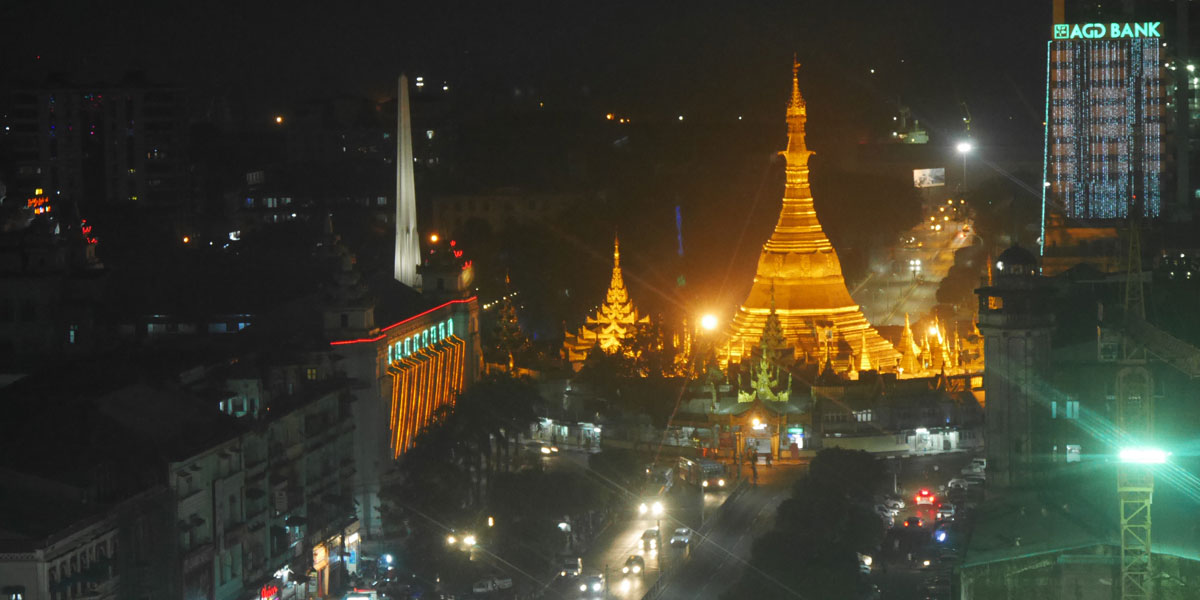
Our trip began in downtown Yangon where the iconic Sule Pagoda glimmers 152 feet high over the darkened city.
Yangon at night with the Sule Pagoda
Visiting the Shwedagon Pagoda
Our introduction to Myanmar began on December 25th with a visit to the Shwedagon Pagoda which is the most sacred Buddhist site for the people of Myanmar. The site consists hundreds of colorful temples, stupas, and statues that reflect various architectural eras spanning almost 2,500 years. The Shwedagon Pagoda forms the focus of religious as well as community activities — bustling with devotees and monks washing the statues, offering flowers, worshiping, and meditating.
Later in the day we visited the Kandawgyi Nature Park just east of the Shwedagon Pagoda. Peter and I stayed two nights at a hotel in central Yangon prior to our journey to meet our riverboat.
Golden Buddha at the Shwedagon Pagoda
Two Buddhist nuns at the Shwedagon Pagoda
More offerings to the Buddha
Bumpy Ride to Pyay
The next day, we boarded our bus with our competent tour director. After about six hours on bumpy rural roads we arrived at Pyay where we boarded our boat for an eleven-day journey up the Irrawaddy River.
Holiday decorations at our hotel in Yangon
Our tour director at the front of our bus
View from our bus on our way to Pyay
Starting Our River Journey
We started our river journey with 26 other lucky quests — a mix of English speaking adventurers from the United Kingdom and North America. Our boat was operated by Pandaw Expeditions who pioneered river cruises on the Irrawaddy in the 1990s. Our boat had 14 cabins distributed on two levels with a dining room and a roof-top lounge. It was built in Viet Nam and designed as a replica of one of the original Irrawaddy Flotilla Company steamers with an interior of polished teak and brass.
1 / 7
Our captain meeting us at our riverboat
2 / 7
A welcoming champagne reception as we arrive on deck
3 / 7
Presentation of native foods that will be served on our journey
4 / 7
Down the corridor to our cabin
5 / 7
Our teak cabin with adjoining bathroom awaiting us
6 / 7
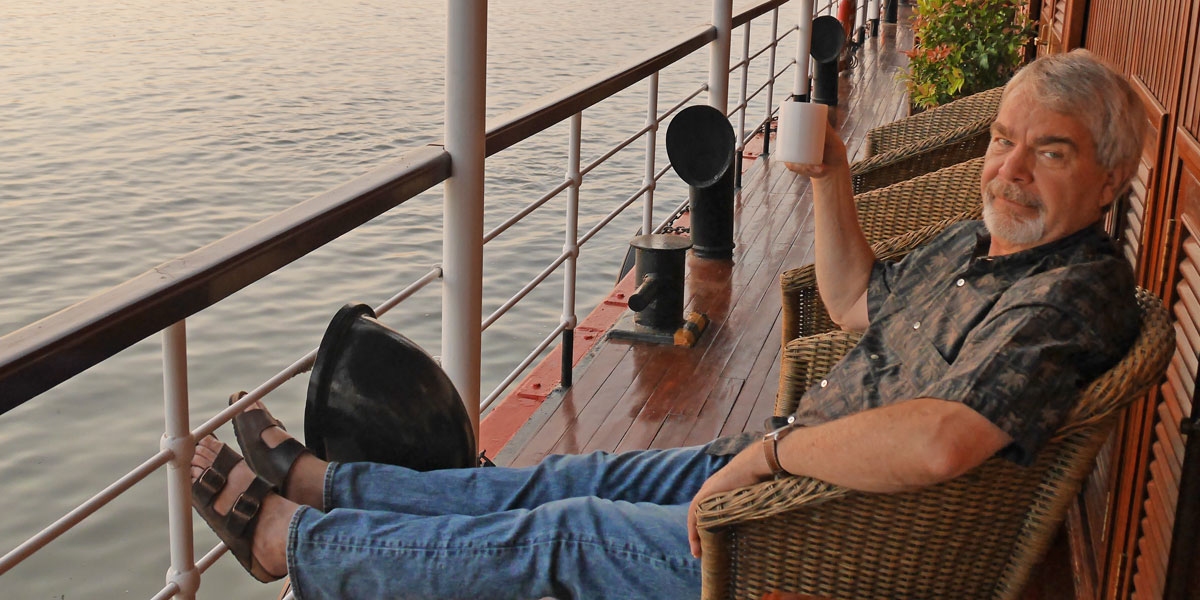
Peter having a cup of tea outside our cabin
7 / 7
A view from the upper deck as we prepare to leave shore
As we left Pyay, we headed up stream to the Thayetmyo Frontier Post, the Pyu Ancient Cities, and a 19th century covered market.
Approaching the Thayetmyo Frontier Post and Pyu Ancient Cites archeological site
Thayetmyo Frontier Post
At the ancient Thayetmyo Frontier Post, some of the village children performed a dance for us in native costumes at their school house. Throughout Myanmar, women and girls apply thanaka to their cheeks — sometimes in decorative patterns. Thanaka is a yellowish-white paste made from ground bark. Aside from cosmetic use, it provides sun screen and promotes smooth skin.
1 / 6
Village girls in costumes for dance
2 / 6
Two village boys looking into the school house window
Over the next days, we visited the Pyu Ancient Cities — including the remains of the three brick, walled and moated cities of Halin, Beikthano and Sri Ksetra — now a UNESCO World Heritage Site. The Pyu Ancient Cities provide the earliest testimony of the introduction of Buddhism into Southeast Asia almost two thousand years ago.
Ancient stupa at Pyu Ancient Cities
Approaching Magway and one of the monasteries
Entrance to one of the stupas
Stopping at Magway
Our boat then traveled to Magway where we visited a village market and the Minhla Fort — built by the Italians.
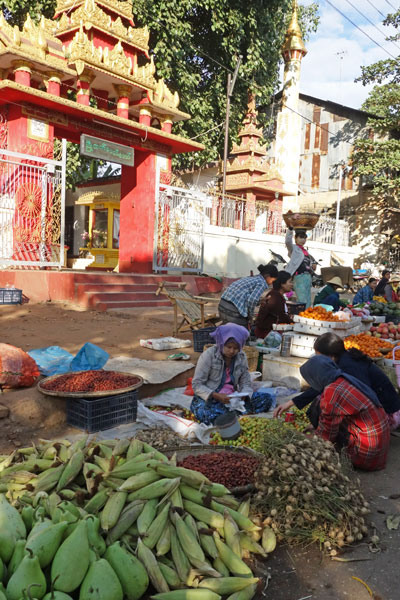
Market in Magway
Typical architecture in Magway town
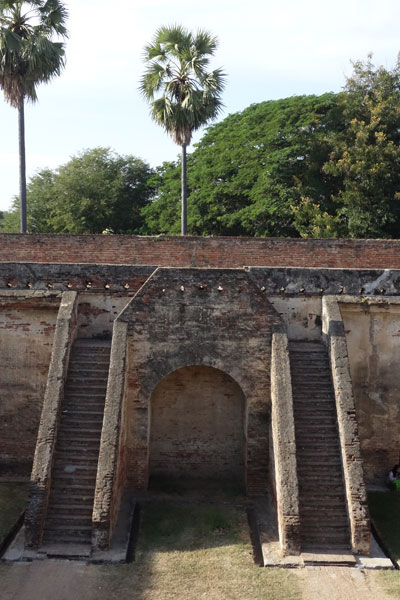
Italian-built Minhla Fort
Approaching the Bagan Area
After another morning of cruising, we approached the Bagan area. Our first visit was to the monasteries in Sale. The Yout-Saun-Kyaung monastery is Sale's major point of interest for its superb, intricately carved teak-wood figures depicting stories from the Buddha's previous lives. This impressive teak monastery was built in 1882 and has detailed carvings all around the outside of the building.
Yout-Saun-Kyaung monastery in Sale
Approaching the teak monastery at Sale
Detail of the roof carvings
Resident monks at the monastery
Exploring Bagan
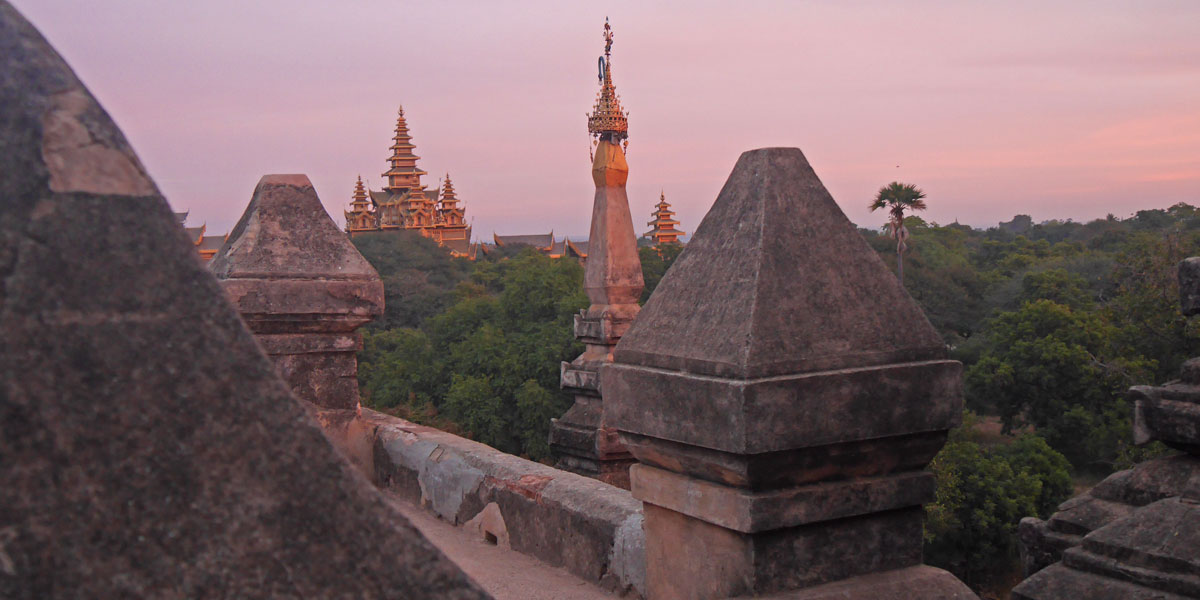
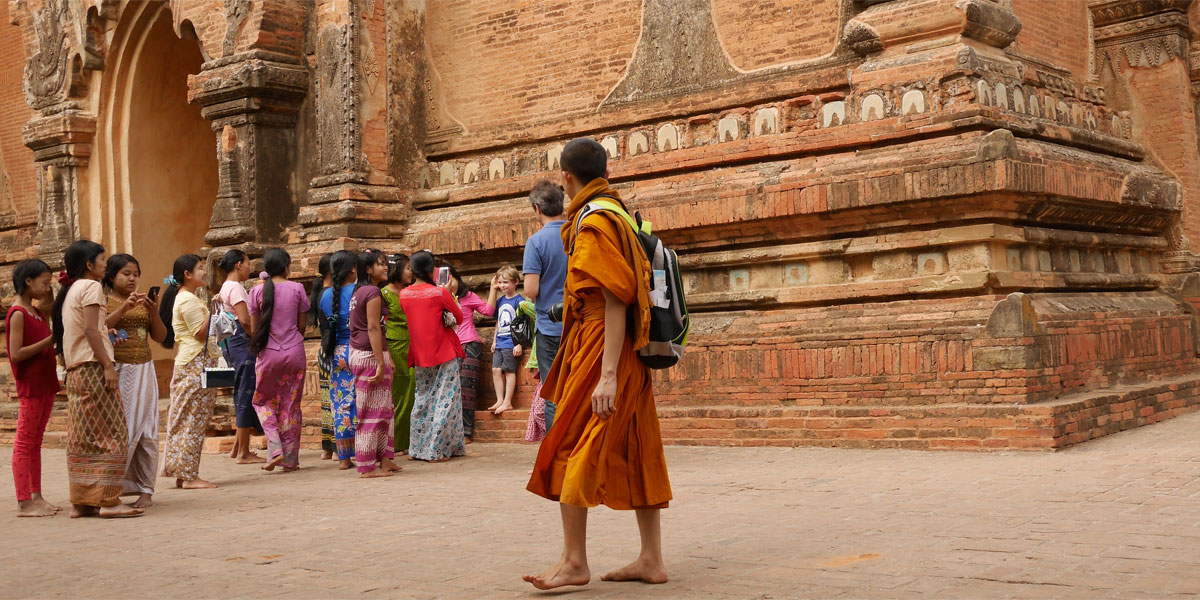
Over the following days we explored the World Heritage Site of Bagan — with some 2,000 pagodas, temples, and monasteries spread over 16 square miles on the eastern shore of the Irrawaddy. Built by megalomaniac kings from the ninth century onwards, some contain superb frescoes of everyday life while others have giant statues of the Buddha. Upon arrival, we visited the revered sites of Dhammayangyi and Ananda. These are some images from our time spent in the Bagan area.
1 / 8
View across the Bagan area
2 / 8
Mountaintop monastery at Bagan
3 / 8
Monk observing visitors taking photos of a boy
4 / 8
Painted ceiling inside one of the monasteries
5 / 8
Buddhist monks having lunch
6 / 8
Giant Buddha
7 / 8
Overlooking the Bagan plains
8 / 8
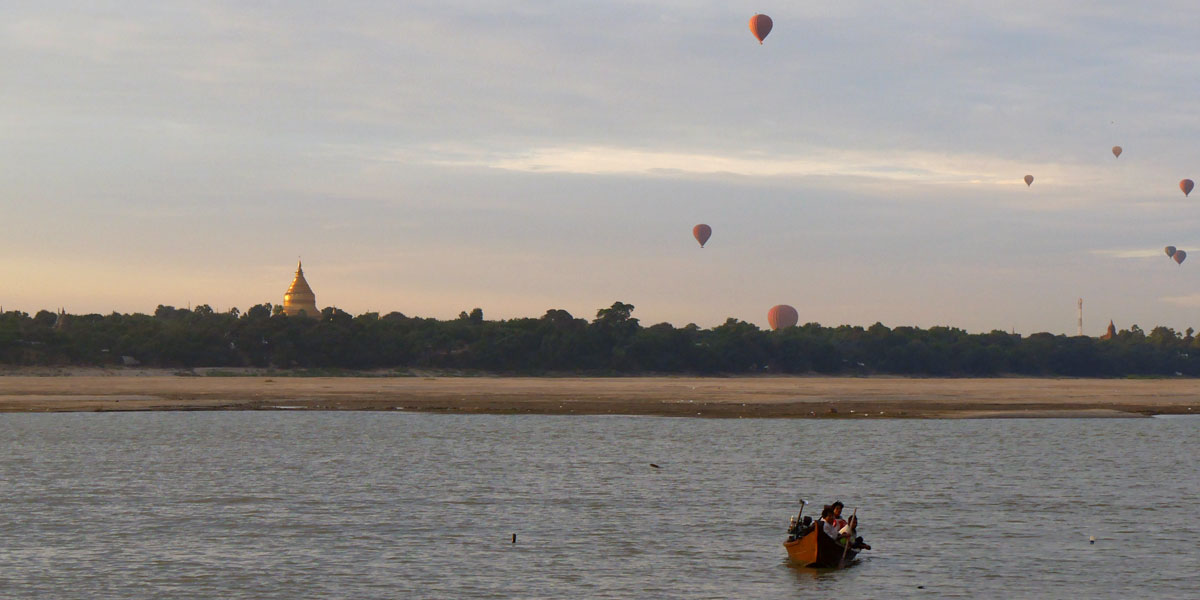
Hot air balloons over Bagan at dawn on New Year's day
We climbed up the steps of the North Guni Pagoda for a view of the Bagan area at sunset on our last day before continuing our cruising up river.
Beautiful sunset looking over Bagan
Leaving Bagan for Yandabo
As we left Bagan, we continued cruising up to Yandabo where the Treaty of Yandabo (which ended the First Anglo-Burmese War) was signed on 24th of February 1826. This treaty financially crippled the country but the Burmese still fought two more wars before the British swallowed the whole country in 1885.
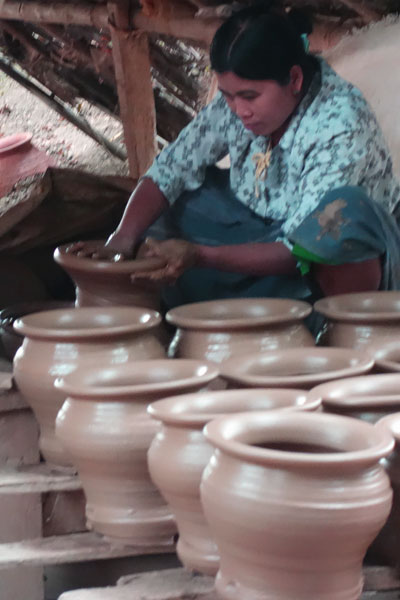
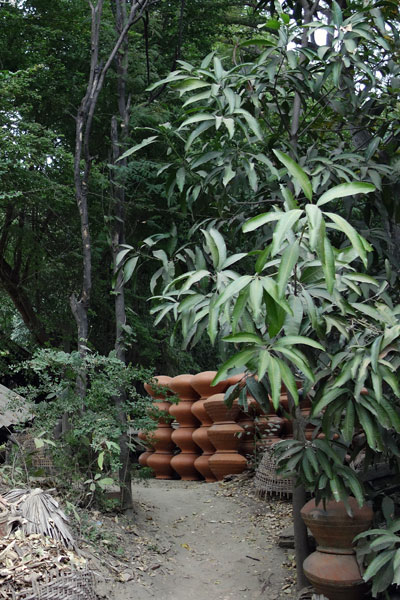
The village of Yandabo is a major pottery-making center with some 400 houses. Many of the families are potters while other villagers are farmers, fishermen or suppliers of raw material such as clay or wood for the kilns. The pots are used primarily for the storage of water and food supplies and made by the women with one person potting while the other operates the wheel using a treadle. The pots are decorated and arranged in a circular pattern to dry — covered with a large pile of ash, straw, and wood and then set on fire. There may be up to three thousand pots in a single layer. At the end of the firing process the pots have changed from dull brown to a brilliant red color and are transported by boat all over the country.
Yandabo pots being thrown
Pot decoration
Fired pots awaiting transport
Touring Ava City
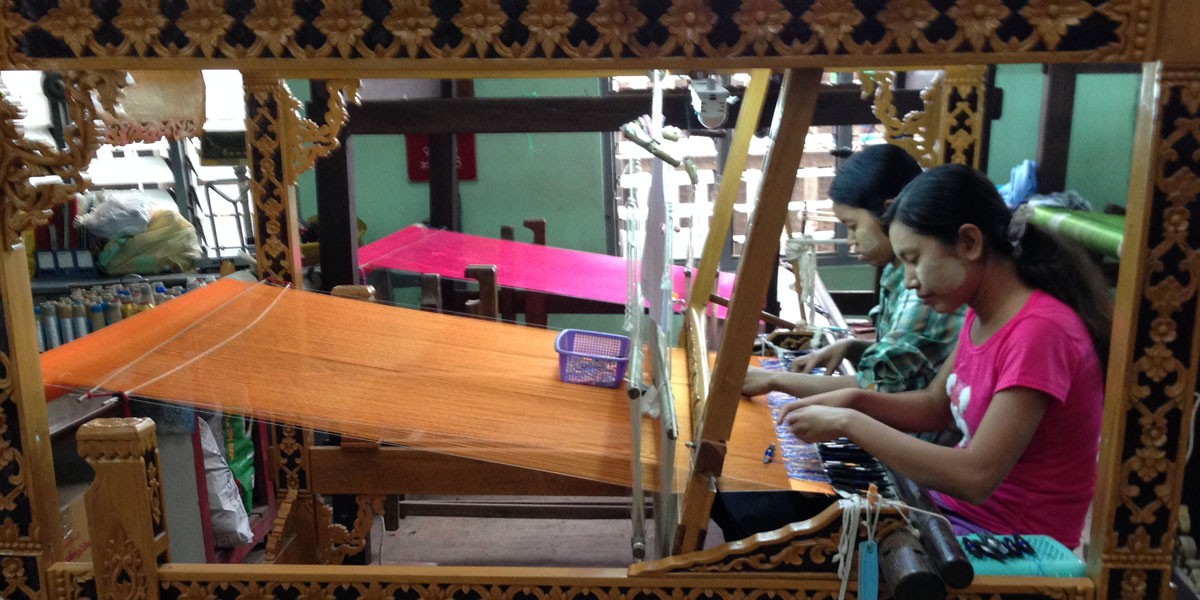
As we continued cruising north toward Mandalay, we toured Ava City by horse-drawn cart and visited weaving and lacquerware workshops.
Women weaving at silk workshop
Umbrellas for sale at lacquerware workshop
Reaching Amarapura
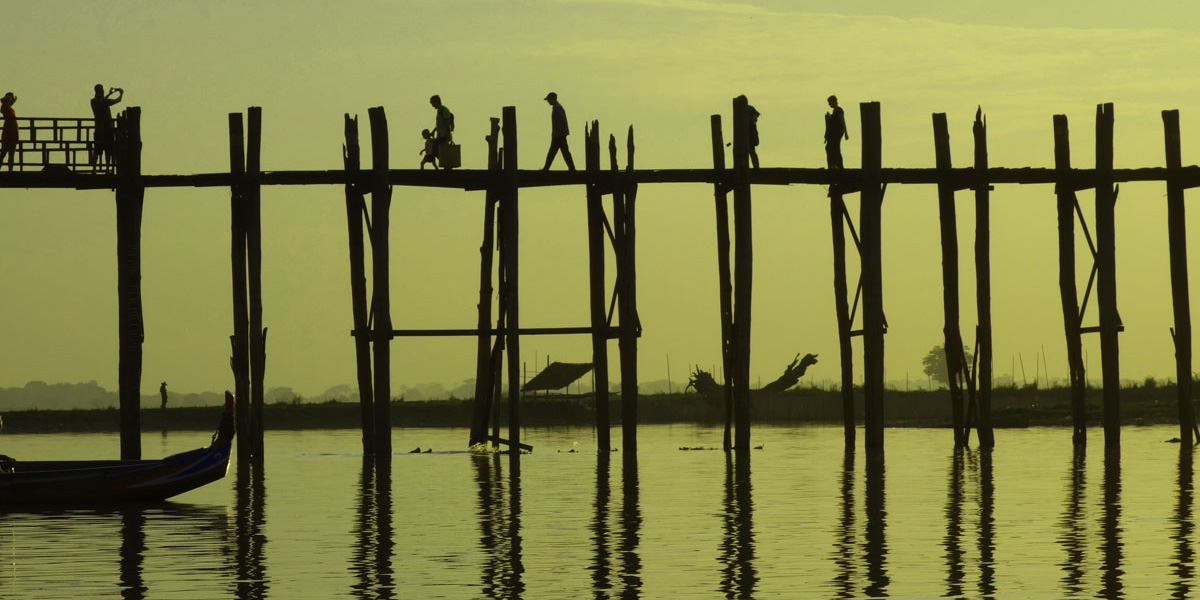
Next, we visited the former royal capital of Amarapura with its iconic pedestrian U Bein bridge. This bridge spans the Taungthaman Lake and is the world's longest teak bridge.
U Bein bridge at sunset
Ending in Mandalay
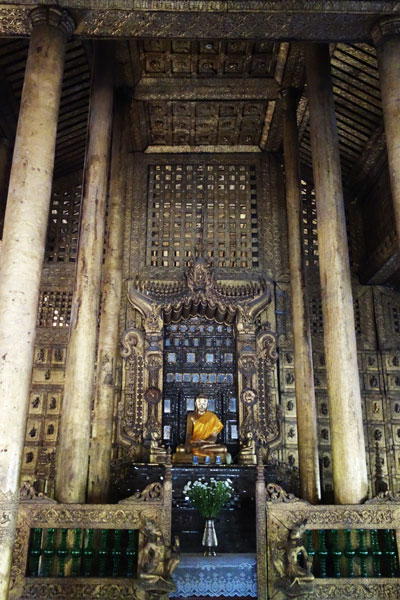
Arriving in Mandalay, we toured the Shwenandaw Golden Palace monastery which is one of the finest examples of 19th century carved teak buildings.
Approaching the Shwenandaw Golden Palace monastery
Large Buddha inside the monastery
Teak carvings along the corridor
On the next day, we toured the Mahamuni Pagoda — the country's most sacred site after Shwedagon — and also visited the red-brick walled city of Mandalay. Later in the day, we were treated to a puppet show on our boat put on by local puppeteers. At the end of our journey we flew to Bangkok for a week — a city with which we are very familiar.
1 / 6
Entering the Mahamuni Pagoda
2 / 6
One of many Buddhas in the Mahamuni Pagoda
3 / 6
View of the many buildings throughout the grounds
4 / 6
View of the red-brick walled city of Mandalay from the palace bridge
The Irrawaddy bisects Burma, rising among Himalayan glaciers and flowing freely for 1,348 miles across a wide alluvial plain into the Indian Ocean. Traveling by water from Pyay to Mandalay we covered 325 miles of the Irrawaddy River. Each day began with the sound of devotional chanting from waterside monasteries, surely one of the most beautiful wake-up calls in the world. At some points, the Irrawaddy is almost a half-mile wide and just a few feet deep as its waters eddy around sand islands. It is difficult to capture the different views from our boat — from fishing boats, barges, bridges, hillsides dotted with pagodas, to encampments along the shore with water buffalo and bathers — but here are some of our most memorable views of the shore from our boat.
Postscript — timing is everything. We were overwhelmed with the sense of optimism by the Burmese as we traveled through Myanmar with posters for Aung San Suu Kyi everywhere. In November 2015, she led her National League for Democracy to a sweeping victory in Myanmar's first openly contested election in 25 years.
Posters for Aung San Suu Kyi in a village
However, she was deposed by a coup in 2021 when the military took control and arrested her and the political leadership around her. Due to civil unrest and armed conflict, the U.S. State Department has issued a Level 4 Travel Advisory (Do Not Travel) for Myanmar.
Also, since our visit, more than 400 of Bagan's buildings were damaged as a result of a 6.8 magnitude earthquake which hit central Myanmar in August of 2016. Unfortunately, earthquakes occur regularly in central Myanmar and many of the temples have been damaged and reconstructed over several centuries.

 The British captured this country in 1885 — which they named Burma. Although Burma was given full independence in 1948, the military took over power in 1962. At the onset of 2015, on the cusp of its first general election after more than 50 years of military rule, Peter and I spent 14 days in Myanmar. Most of our time was spent on a riverboat traveling south to north up the Irrawaddy River from Yangon to Mandalay.