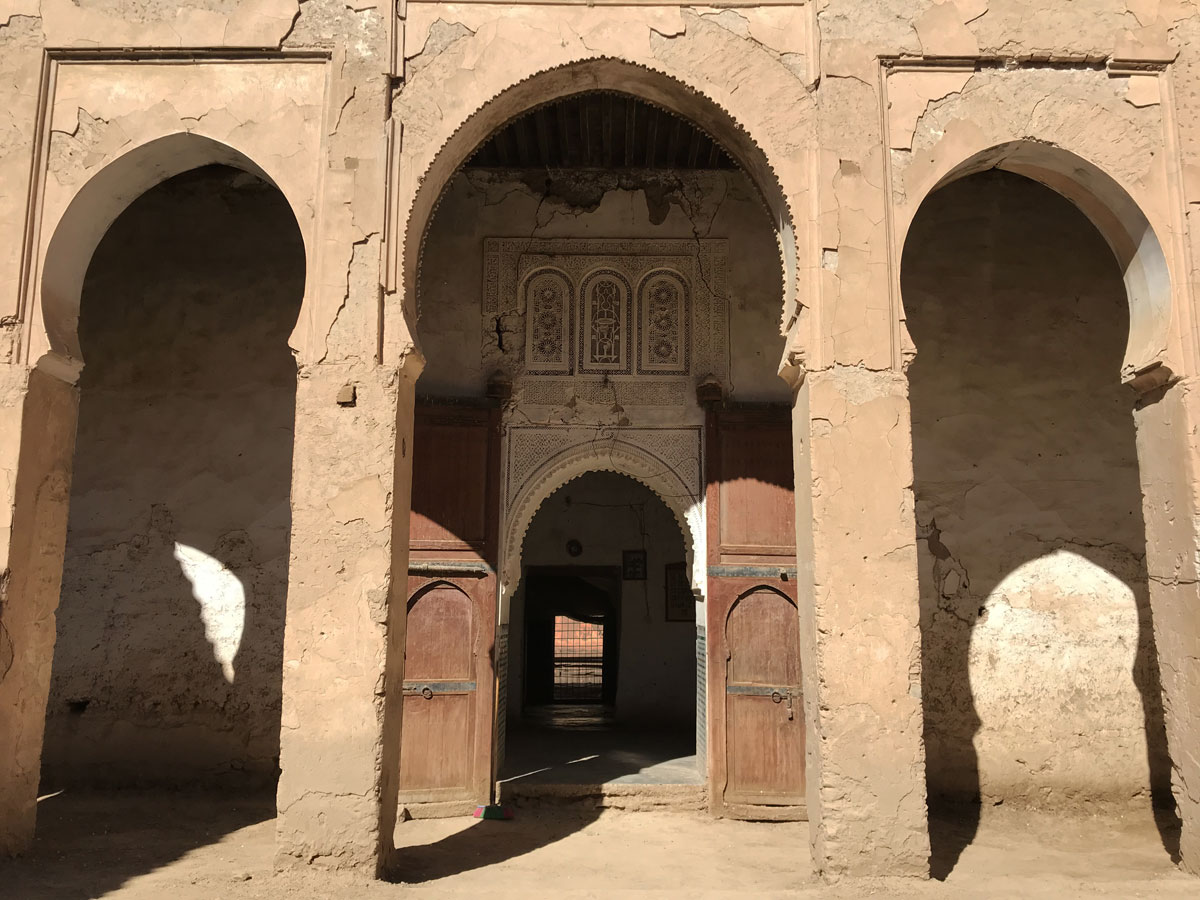
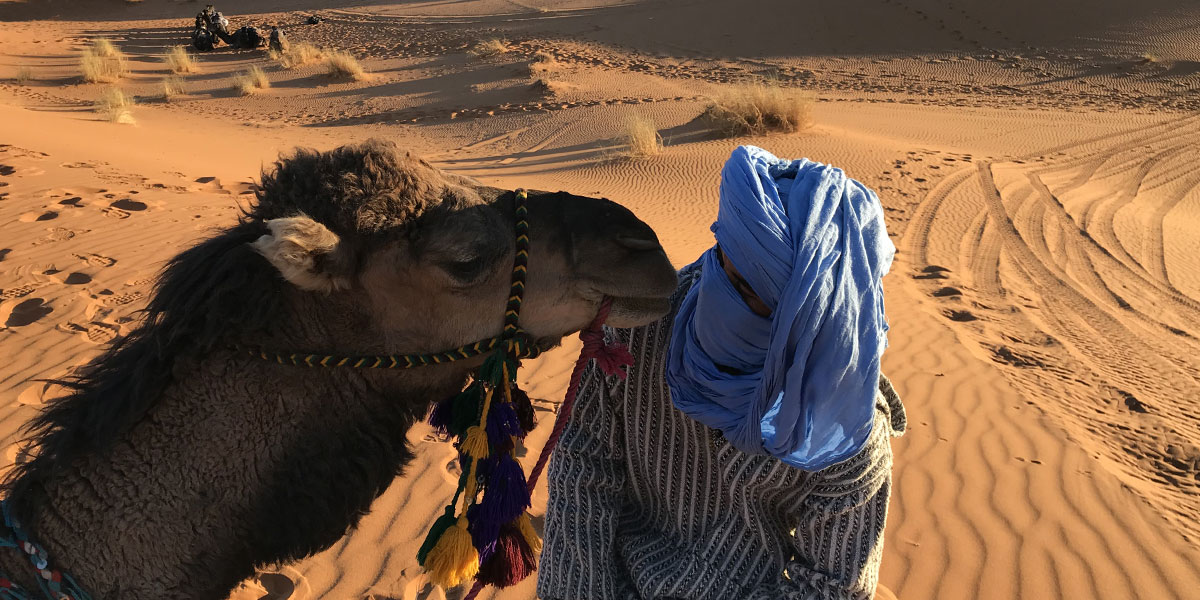
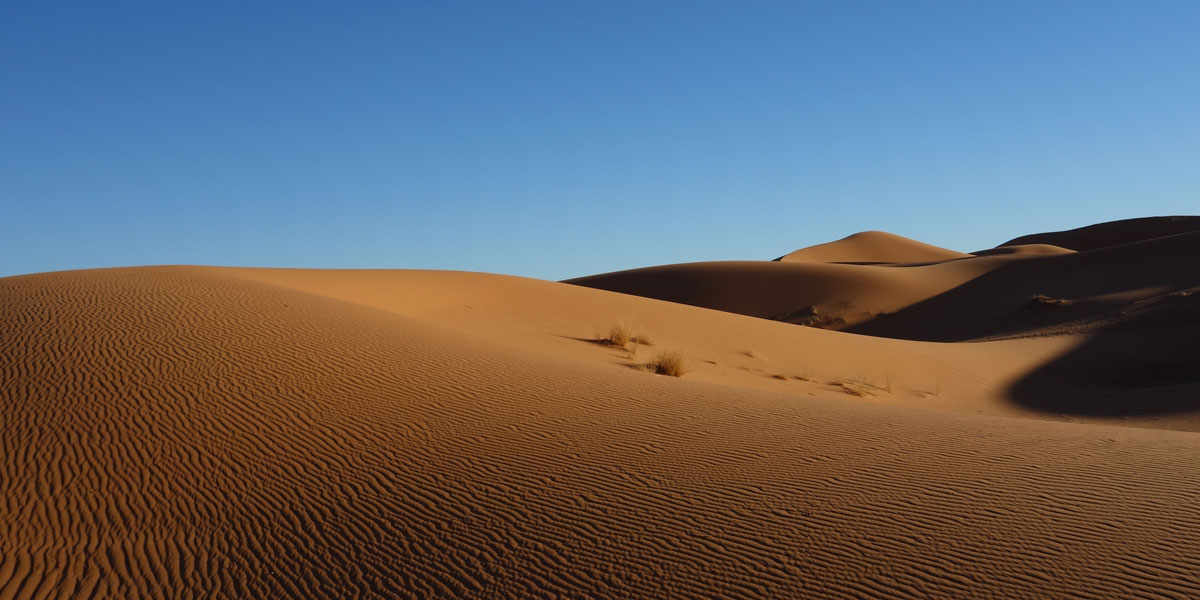
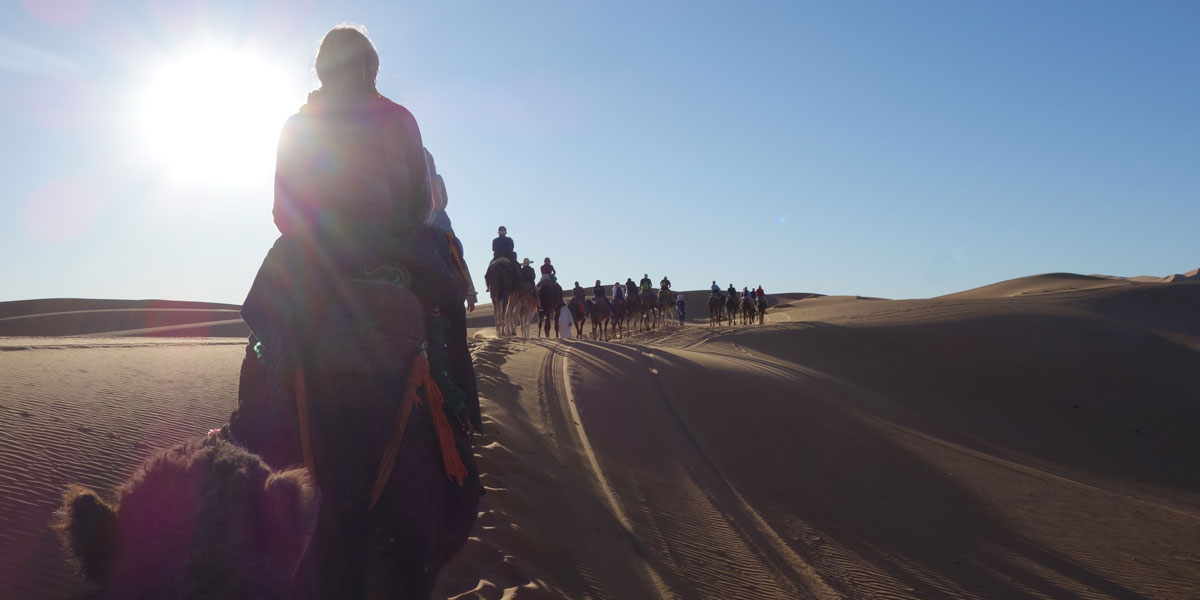
In January 2020, I travelled to Morocco — my first time visiting the African continent. After flying into Casablanca, Peter and I traveled to the ancient cities of Rabat, Meknes, Fez, and Marrakech and through the Atlas mountains to experience the vast Sahara Desert. Because Morocco was under French control from 1912 until it gained its independence in 1956, the French influence on this country is apparent in many places.
Starting Out in Rabat
Our journey started in Morocco's current capital city of Rabat — one of Morocco's four historical capital cities — where we visited the Royal Palace, the fortified Kasbah Chellah, and the museums of archeology and contemporary art.
Visit to the Royal Palace
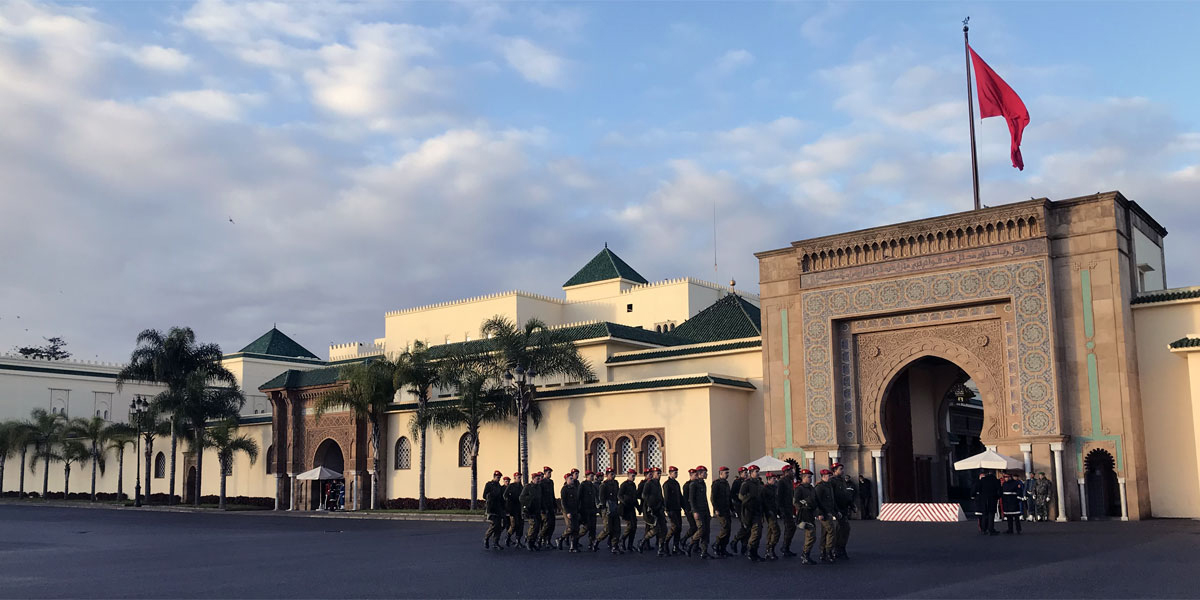
ince the reign of sultan Mohammed ben Abdallah, the Alaouite sultans and kings have maintained a palace in Rabat. The current building was built in 1864 by Mohammed IV to replace an older palace. While the French controlled Morocco, they wanted the king to be largely stationed in one place although he had many residences at his disposal. After independence, the Dar al-Makhzen palace was chosen as the official residence of King Mohammed VI and it is also the home of the Moroccan Royal Guard.
View of the primary home of the King of Morocco from Dar al-Makhzen square
Roman Site of Chellah
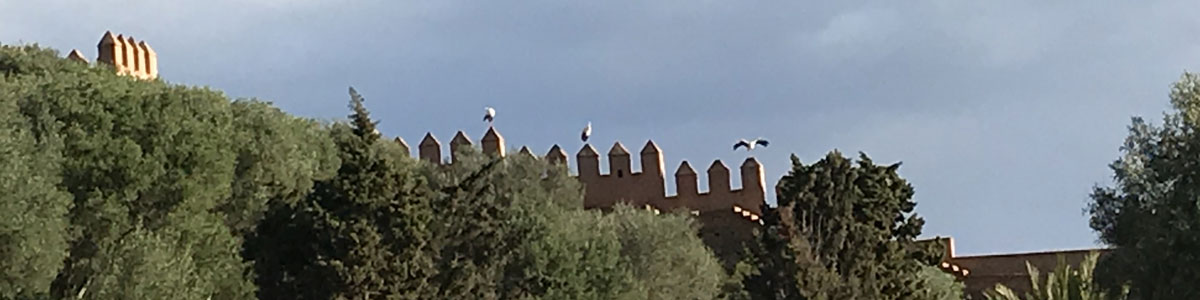
Designated a UNESCO World heritage Site in 2012, this walled ruin of a town contains the remnants of Sala Colonia — a port that was abandoned in 1154. The gardens, pavilions, and ruins are spread out over multiple levels and it is an overgrown and atmospheric site adorned by many storks’ nests.
Entrance to the gardens and ruins at Chellah
Overall view of the Romans ruins at Chellah
Panoramic view of the ruins at Chellah with many storks nests
Museums Visits
Rabat's Museum of Moroccan History and Civilization contained some interesting artifacts and the architecture and collections at the new Mohammed VI Modern and Contemporary Art Museum was impressive — particularly with Botero's horse sculpture at its entrance (photo at right). After crossing the river to Sale, we had lunch in a private home.
Hassan Tower and the Mausoleum of Mohammed V
The Hassan Tower is the minaret of an incomplete mosque that was commissioned by the third Caliph of the Almohad Caliphate in 1195. This tower and mosque were intended to be the world’s largest. When he died, construction on the mosque stopped and the tower reached about half of its intended height of 260 feet. Only the beginnings of several walls and 348 columns of the mosque were constructed. The mausoleum sits adjacent to the Hassan Tower and contains the tombs of the Moroccan king and his two sons, late King Hassan II and Prince Abdallah.
The incomplete minaret of the 12th century Hassan Tower and unfinished mosque
Inside view of the Mausoleum of Mohammed V
A kasbah — usually with high walls and without windows — was a place for the local leader to live and a defense when a city was under attack. A medina is the old part of a town or city, found in many countries of North Africa, and is also typically walled with narrow streets, fountains, palaces, and mosques. Souks are the traditional marketplaces and are often divided into sections for the various trades — spice sellers, herbalists, metal workers, tanners, and food markets — all congregated in trade-specific areas within a maze of alleys and narrow streets. A bab is an entrance gate or door to a walled city.
Kasbah Oudaya
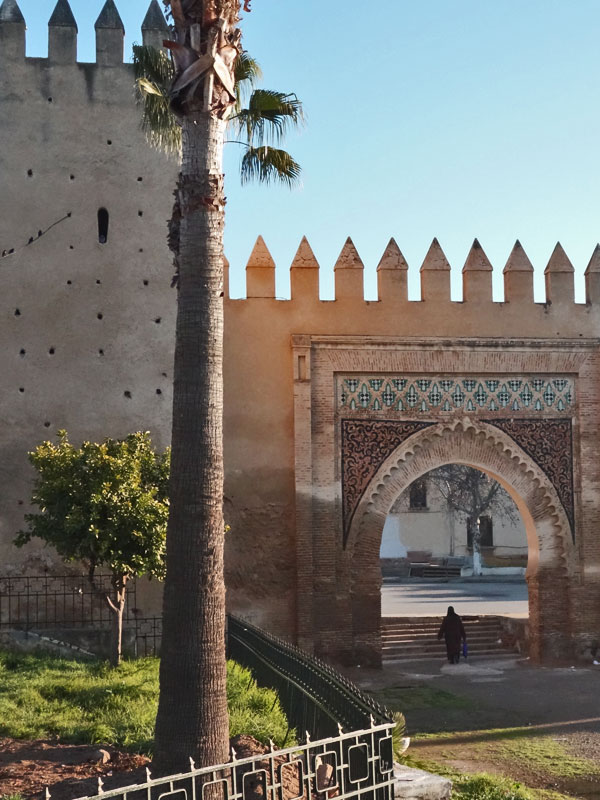
The Kasbah Oudaya, a UNESCO World Heritage Site located at the mouth of the Bou Regreg River, was originally built in the 12th century. In the era of the Alawites, construction of the Amiri Palace and some military installations played an important role in protecting the Kasbah. The Kasbah Oudaya has been a home to many Andalusian immigrants, Arab tribes, and some of the most powerful sultans of Morocco. The most dramatic entry to the Oudaya Kasbah is through the enormous Almohad gate, called Bab Oudaia.
Approaching the walled Kasbah Oudaya
Approaching the main gate of the Kasbah Oudaya
Colorful buildings lining the narrow streets of Kasbah Oudaya
View from the Kasbah Oudaya over the mouth of the Bou Regreg River
Meknes. On the way to Fez we stopped in the town of Meknes — another UNESCO World Heritage Site — where we saw the impressive Bab el Mansour gateway and visited the ruins of the imperial granaries and stables.
The impressive Bab el Mansour gate to the walled city of Meknes
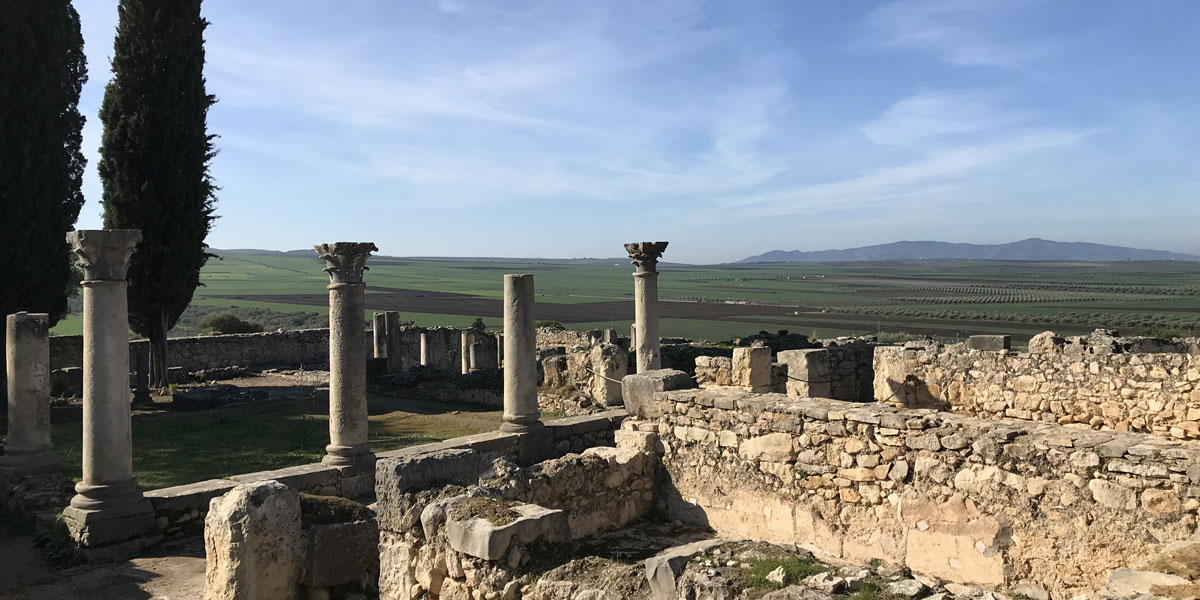
Panoramic view of Volubilis
Volubilis
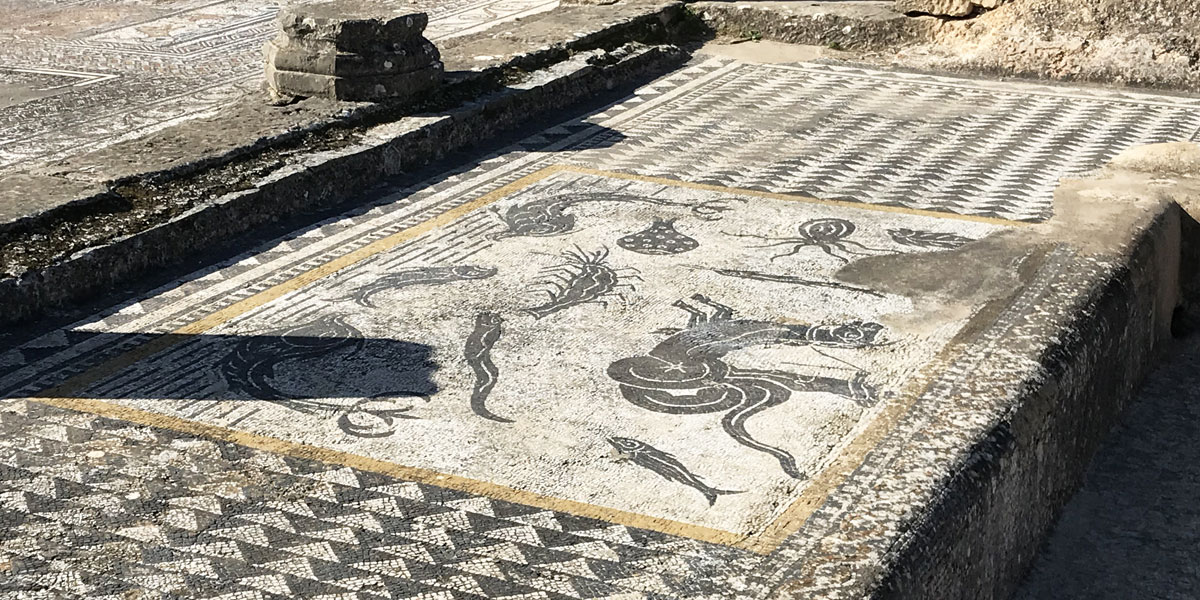
Volubilis — yet another UNESCO World Heritage Site — is the largest of the Roman's 17 colonies established in Morocco between the 1st century BCE and the 2nd century CE. The excavated ruins include many colorful mosaics and freestanding columns and archways that frame lovely views of the Moroccan countryside.
We spent two days in Fez which was founded in the 8th century and home to over one million people. Much of our time was spent walking through the medina — home to 156,000 residents spread over 540 acres. We also saw the historic Blue Gate and visited the medieval school of Bouanamia, the 12th century home of the Jewish scholar Maimonides, and the Al-attarine Madrasa. The University of Al Karaouine — founded in 859 CE and the world's oldest continually operating university — is also located in Fez's medina.
Panoramic view of Fez
Our guide in front of the famous Blue Gate in Fez
A narrow alleyway in the Fez medina
Typical street in the Fez medina
Variety of Vendors in the Medina
Walking through the medina with its narrow alleyways and food, spice and artisans' markets was a visual delight although quite harrowing and confusing. Although the medina is free of cars, the flow of pedestrians is continually interrupted by mules, donkeys and an occasional scooter.
An encounter with a mule in an alleyway
Roosters waiting for a new owner in the medina
1 / 8
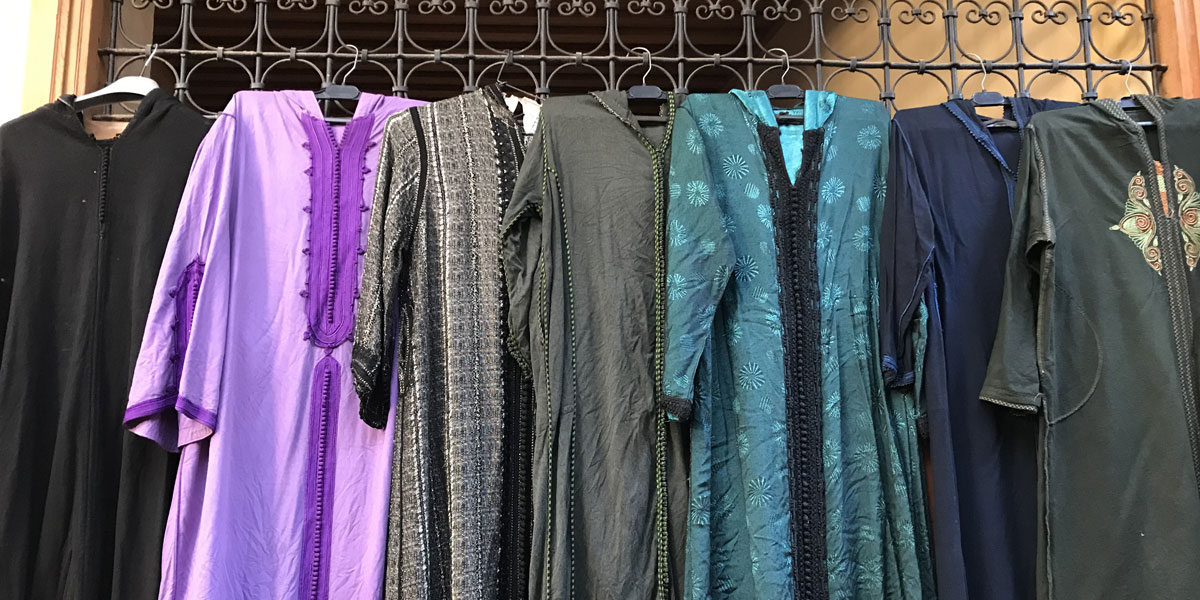
Antique jillaba's — the long, loose-fitting robes common in North Africa — for sale
2 / 8
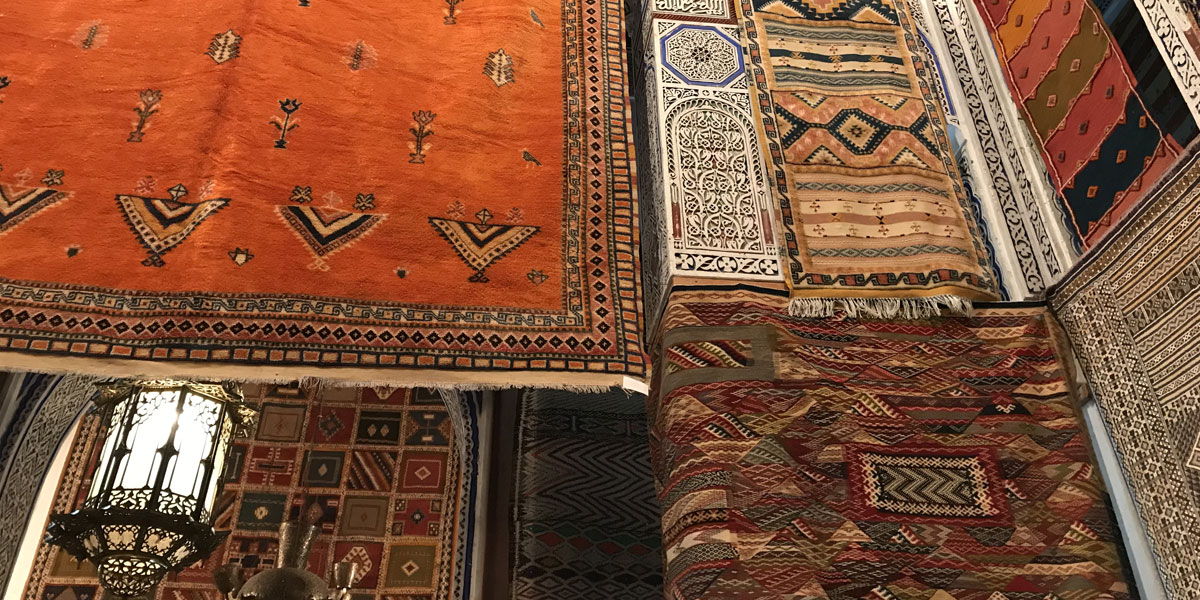
Another vendor offering rugs for sale in a riad courtyard
ver the years, Morocco became home to the largest Jewish population in the Arab world. Before the founding of the State of Israel, there were more than 350,000 Moroccan Jews scattered throughout the country in almost 100 communities. In Fez, we visited the Jewish Cemetery as well as the old Jewish quarter, or mellah, with its tiny alleys and narrow streets.
Entrance gate to the Jewish Quarter in Fez
The Jewish Cemetery in Fez located outside the mellah
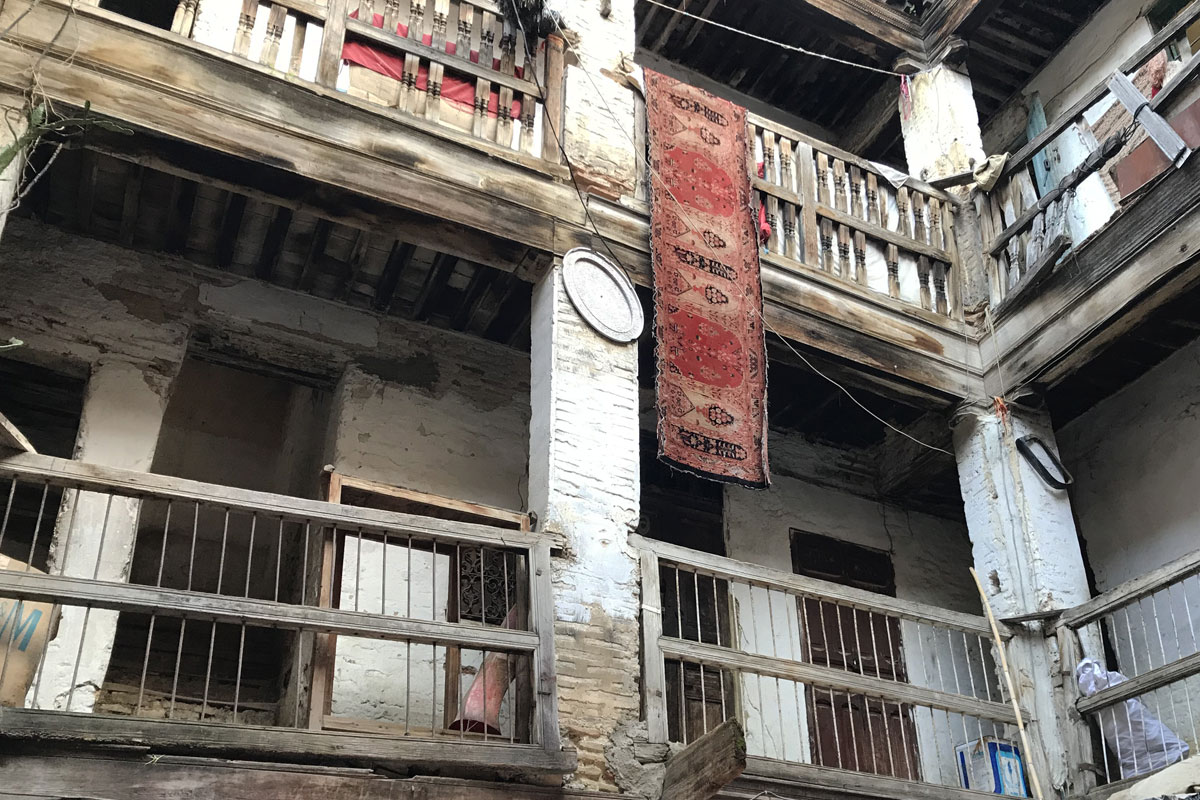
Ancient courtyard in the Jewish Quarter
Fez Leather Tanneries
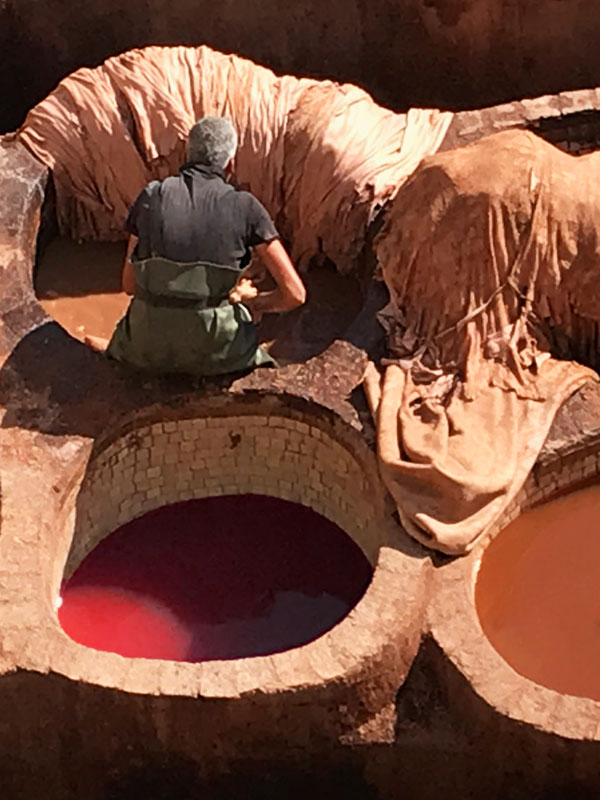
Fez is famous for its leather products and most of it comes from the leather bazaar which is home to three ancient leather tanneries. The largest and oldest — almost a thousand years old — being the Chouara Tannery. Fez’s tanneries are composed of numerous stone vessels filled with a vast range of dyes and various liquids spread out like a tray of watercolors. Dozens of men, many standing waist deep in dyes, tend to the hides soaking in the vessels. The tanneries process the hides of cows, sheep, goats and camels, turning them into leather products such as bags, coats, shoes, and slippers. Without any modern machinery, the process has barely changed since medieval times.
Overlooking a leather tannery in Fez
Tannery worker in the vats
Mosaics and Beautiful Building Details
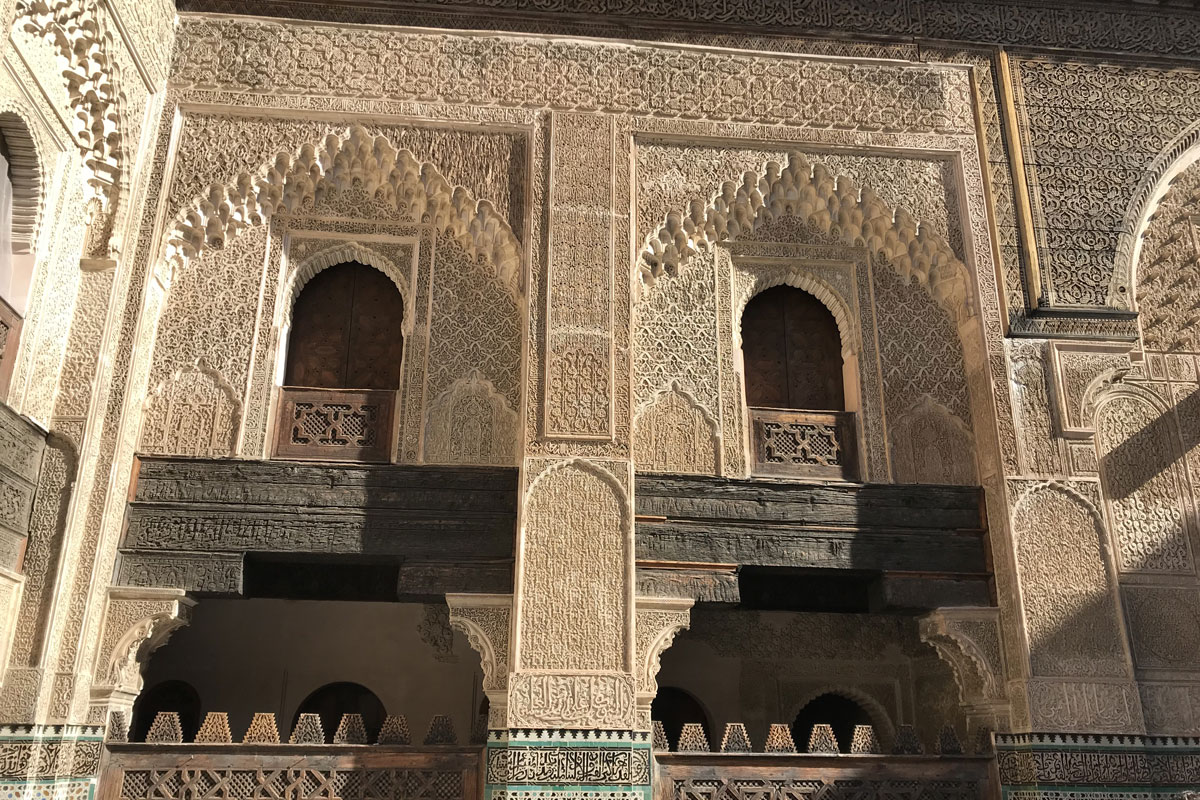
Throughout Fez, I photographed many building details with intricate carvings, mosaics, and metalwork. The courtyard of the medieval school of Bouanania — built between 1350 and 1355 — was one of the most impressive facades in the medina.
Detail from the courtyard of the medieval school of Bouanania
Detail of wall and column mosaic
Detail of door hardware
Departing Fez for the Sahara
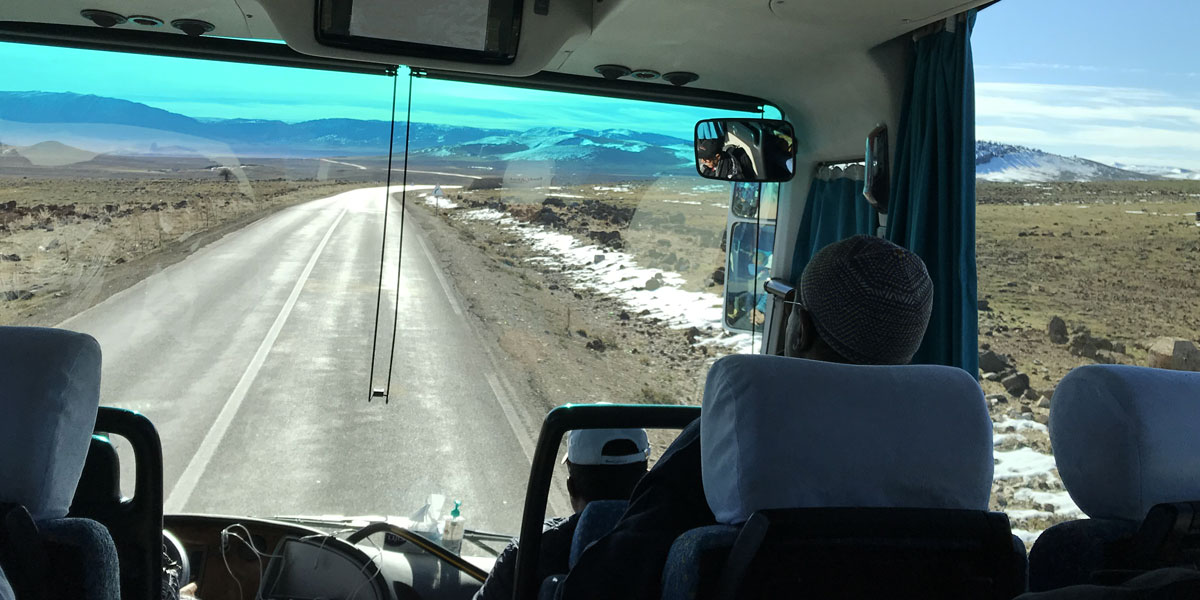
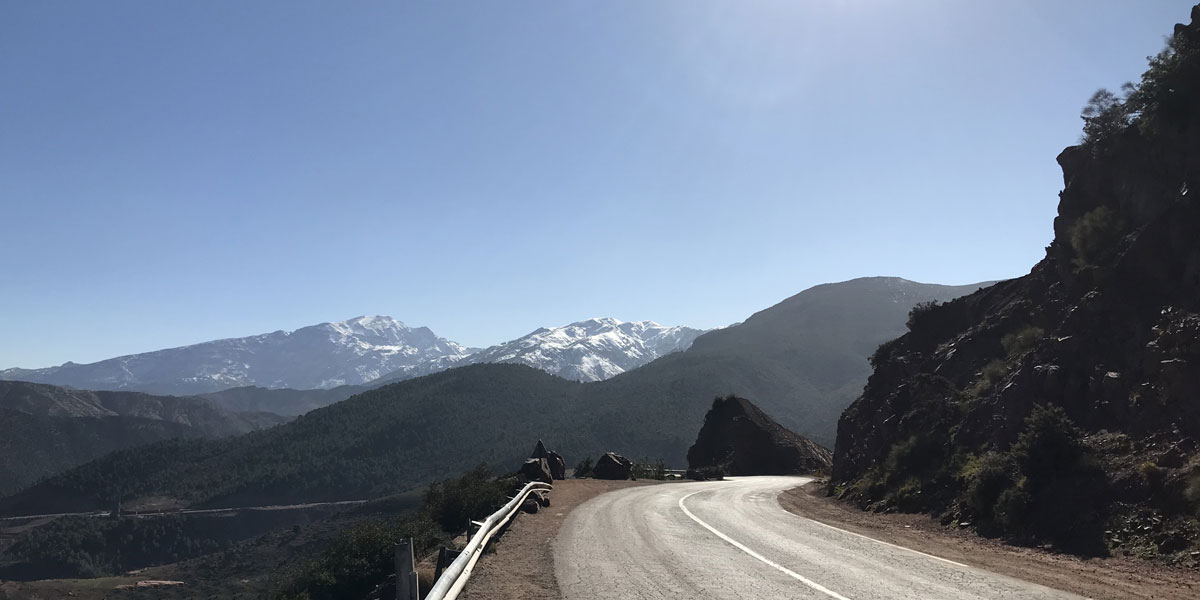
After several days in Fez, we headed inland to Erfoud which is located at the edge of the Sahara desert. Our bus took us through the Middle Atlas mountain range and its cedar forests — the natural habitat of the local Barbary apes. We crossed the Ziz River and ancient fortified villages before reaching our hotel on the outskirts of Erfoud — a walled town built by the French as an oasis fort.
1 / 6
Starting our journey to Erfoud through the Middle Atlas mountains
2 / 6
View of the snow-capped Middle Atlas mountains
3 / 6
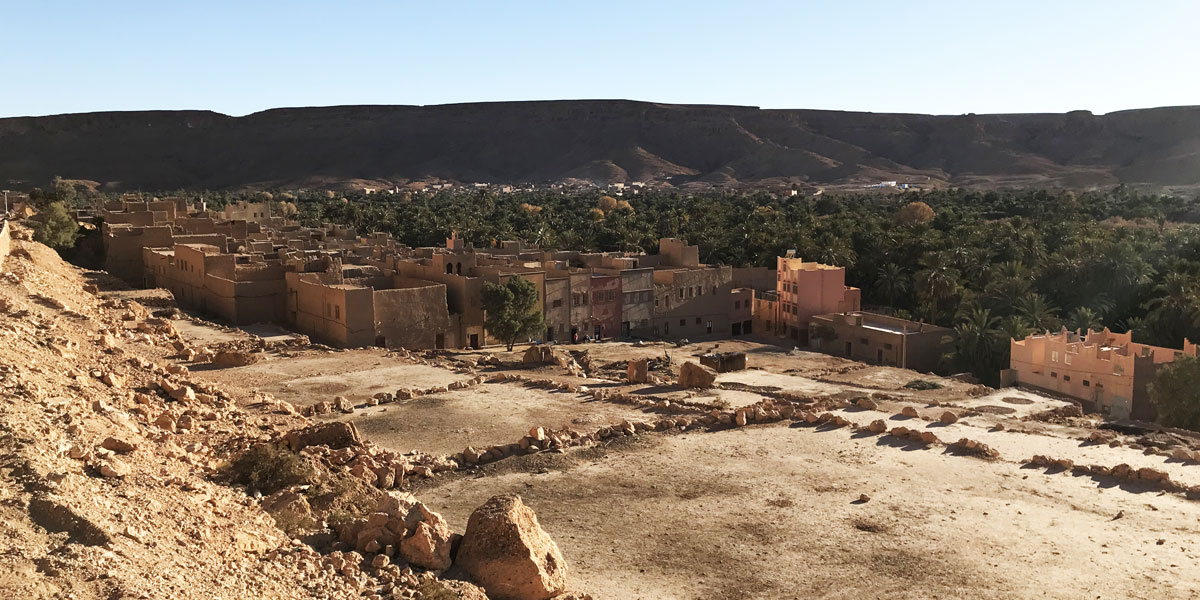
Passing a typical fortified clay village along the way
4 / 6
Another view of a clay fort in front of unique geologic formations
The nearby town of Rissani is the closest town of significant size to the Erg Chebbi — the largest sand desert in Morocco. Rissani was formerly the last staging post on the southern caravan route. Traders would stop here before embarking on a journey across the Sahara to sub-Saharan Africa and across the Levant. We stopped to visit the Ksar Oulad Abdelhalim which was built in 1863 and still retains vestiges of its three functions — a riad, a stable, and a weapons depot. The interior is very damaged but its beautiful carved entrance door and mud brick walls remain.
Entrance to the ruins of Ksar Oulad Abdelhalim built in 1863
Erg Chebbi is one of several large seas of dunes formed by wind-blown sand and is located within an area of semi-arid Pre-Saharan Steppes at the edge of the Sahara. The Sahara desert — stretching from Egypt to Morocco — is the largest hot desert in the world and compares in size to the continental U.S.
Evening Camel Ride Over the Dunes of Merzouga
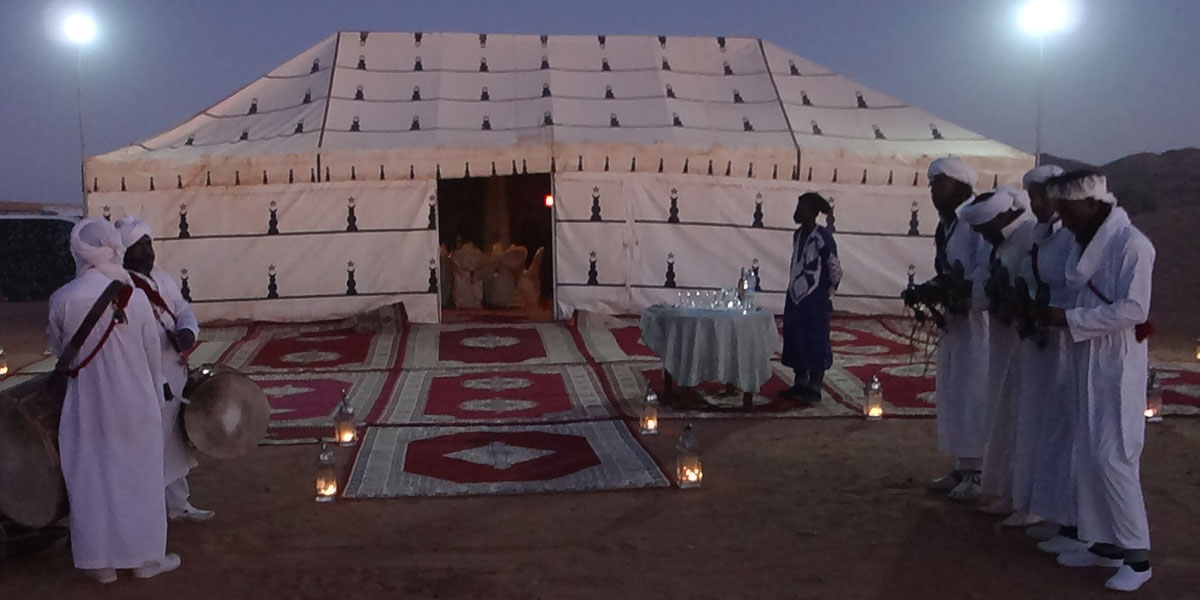
Later the next afternoon we set out for Morocco's only Saharan dunes where Peter and I joined a group for an evening camel ride along the Erg Chebbi — experiencing the enormous silence, vastness, and beauty of the dunes of Merzouga on the edge of the Sahara. We dismounted our camels midway to watch the sun set over the desert. Almost an hour later we dismount our camels again to enjoy dinner in a desert tent.
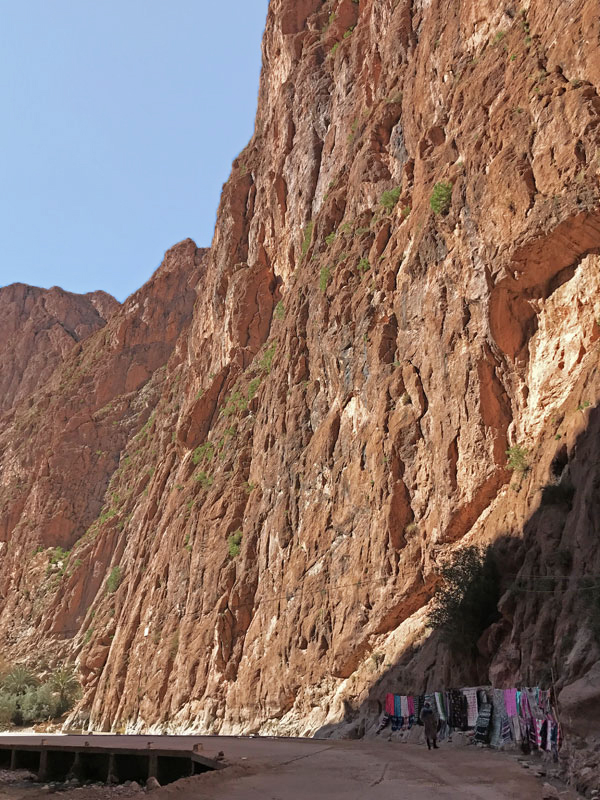
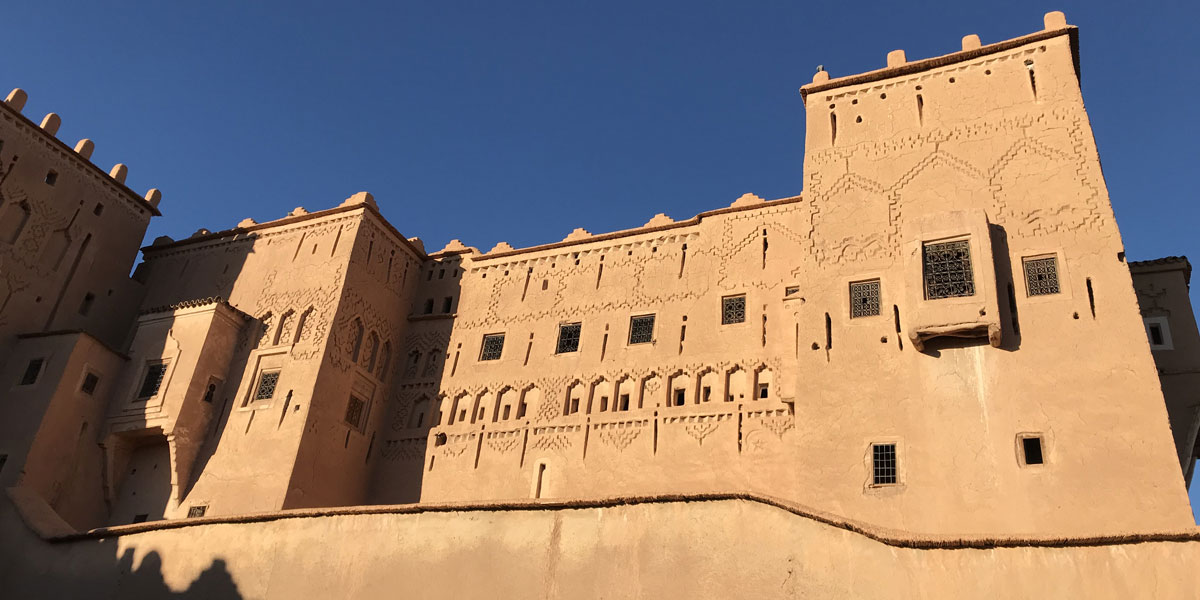
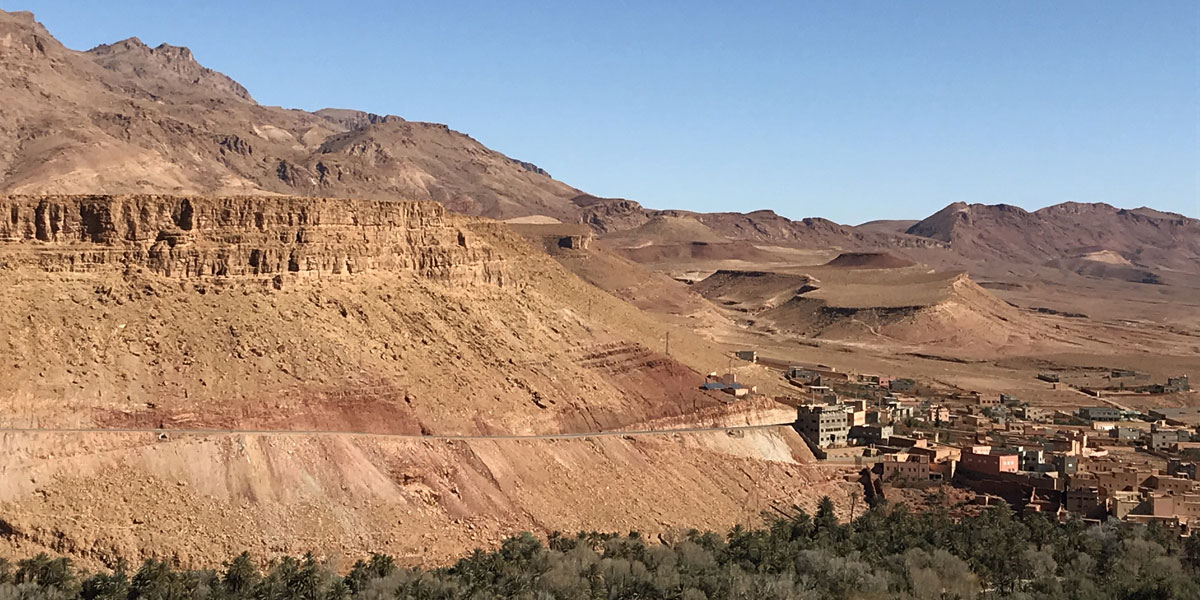
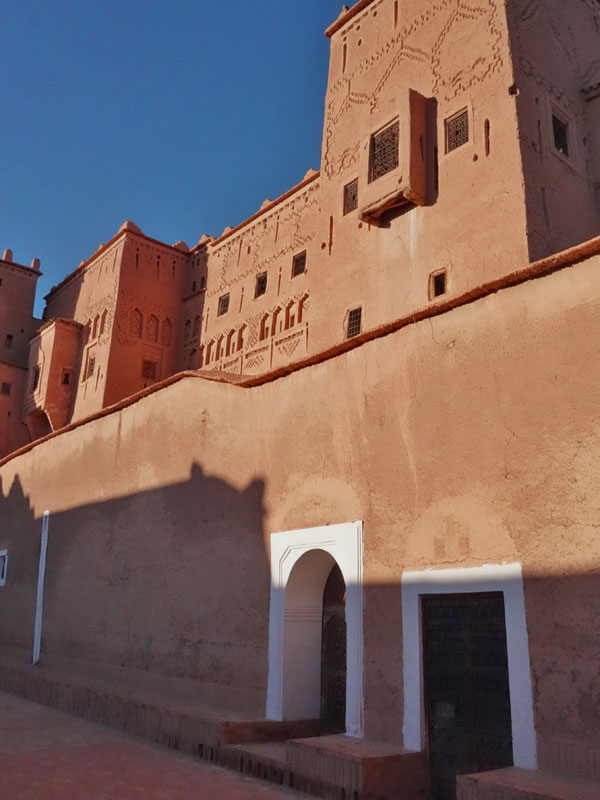
e left Erfoud bound for the town of Ouarzazate, traveling over the snow-capped High Atlas mountains. We passed through the mountain oasis of Tinehir with its ornate clay villages to arrive at the 984-foot high Todra Gorge — a spectacular natural chasm with sheer rock faces rising on either side. After lunch at a local restaurant, we continued on to El Kelaa des Mgouna and then journeyed along Morocco's "Route of a Thousand Kasbahs" — a region of fortresses with elaborately-decorated facades — and arrived late afternoon at our hotel in Ouarzazate.
Panoramic view of the landscape outside Erfoud
Overlooking the town of Tinehir
Passing through the 984-foot Todra Gorge
Bound for Marrakech
The next day we headed to Marrakech — a very long day on a bus but broken up by some interesting sites. After stopping at the uninhabited village of Ait ben-Haddou (a UNESCO World Heritage Site), we descended from the High Atlas mountains through villages with fortified walls and stone houses with earthen roofs. In Ttizi N-Tichka, we traversed the Pass of the Pastures (at 7,415 feet) where life is much as it was centuries ago. We finally arrived at Marrakech late in the afternoon.
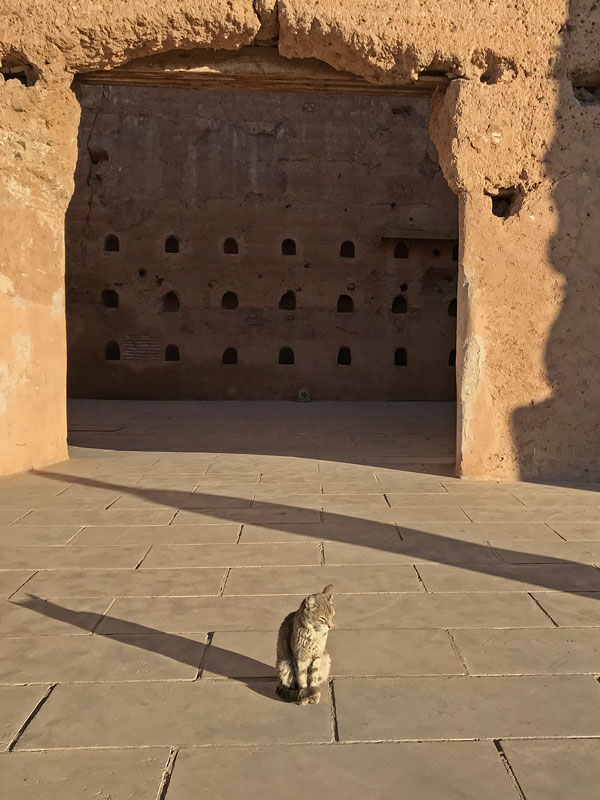
Settled in the early 11th century, Marrakech is Morocco's fourth largest city and has both an ancient walled medina and interesting modern architecture. In Old Marrakech, we visited the Koutoubia Mosque with its distinct 282-foot minaret, the relatively contemporary (19th century) Bahia Palace with its Andalusian influence, and the ruins of the El Badi Palace which was built in 1578 in the style of Granada's Alhambra. The next day we headed for Djemaa El Fna square — the heart of Marrakech with its snake charmers, storytellers, acrobats, and musicians. Its circus atmosphere has existed since the city's earlier days and serves as a mecca for both locals and tourists. We spent the rest of the day walking through the medina and marveling at its many different souks.
Panoramic view of Djemaa El Fna square — the center of the medina
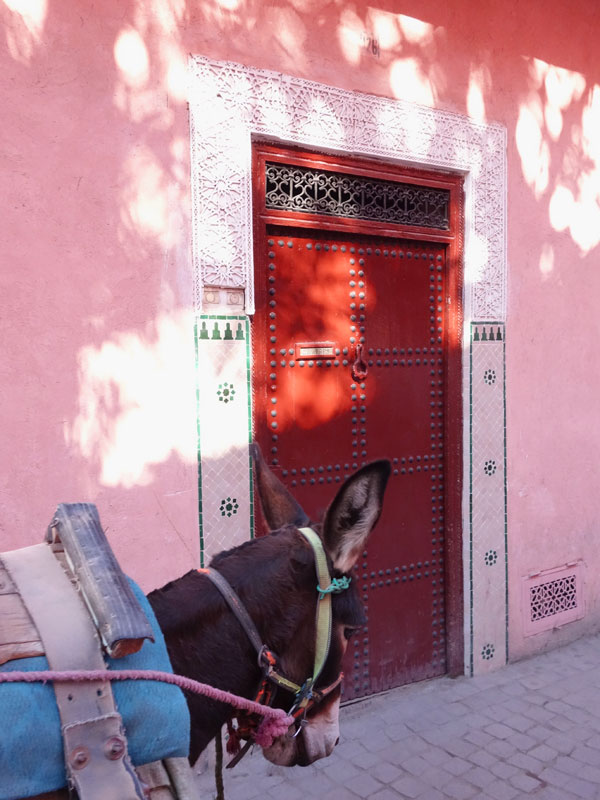
Donkey in the Marrakech medina
Spices on display in the Marrakech medina
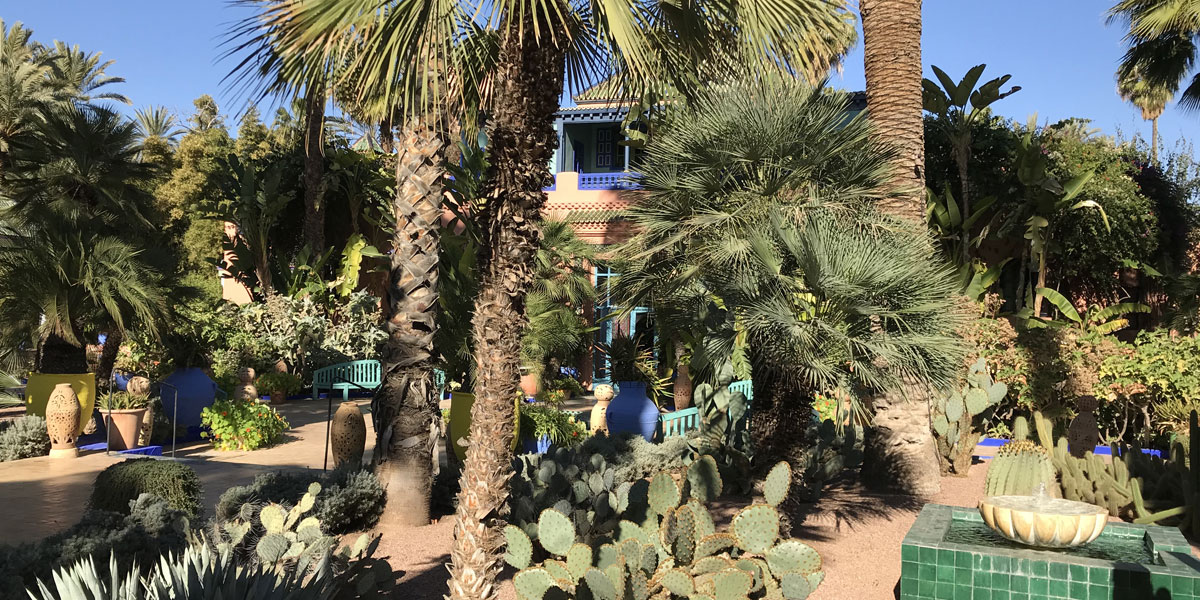
Colorful plantings in the Majorelle Gardens
Display at the Yves St. Laurent Museum gift shop
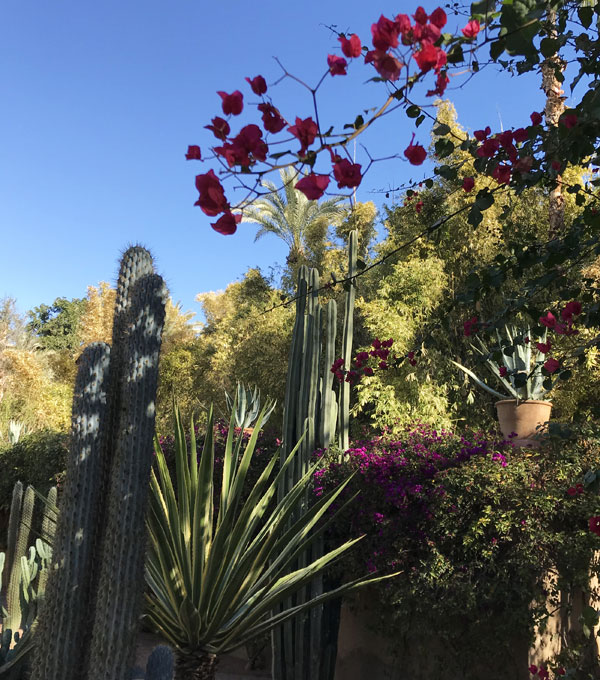
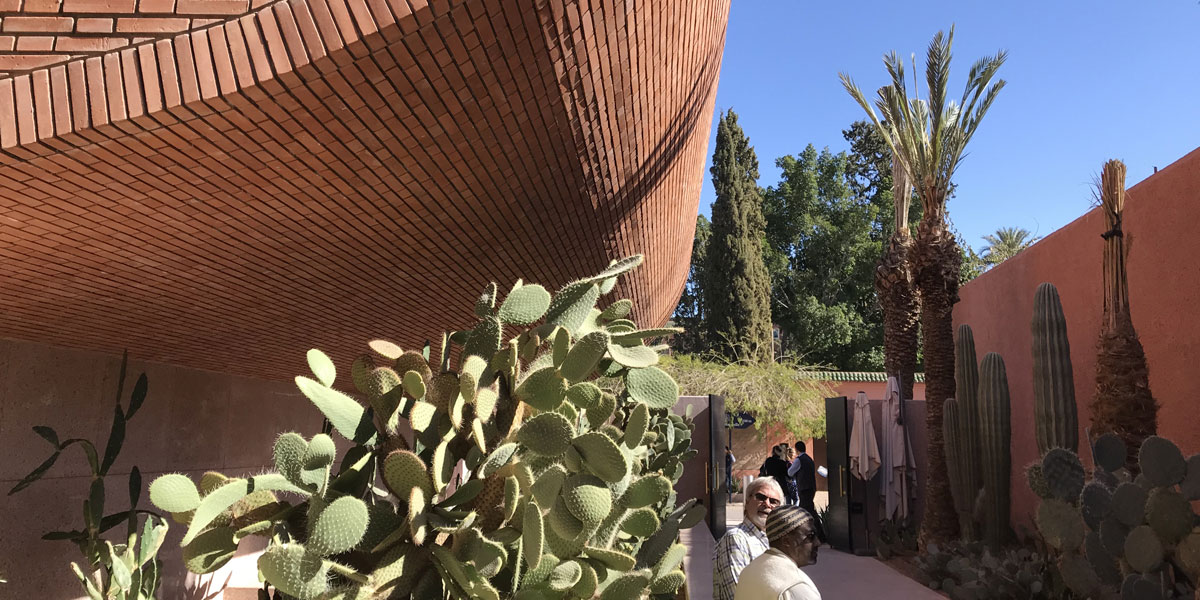
The following day we toured the lush Majorelle Gardens in the center of the city. French artist Jacques Majorelle created this botanical garden in 1924 and today it has 15 species of birds native to North Africa. Afterwards, we visited the newly-opened Yves St. Laurent Museum, adjacent to the Majorelle Gardens, which honors the work of the famous French designer and his deep connection to Morocco.
1 / 12
View of the Koutoubia Mosque
2 / 12
Approaching the El Badi Palace
3 / 12
View over the El Badi Palace grounds
4 / 12
Wall detail at the El Badi Palace
5 / 12
Ceiling detail at the Bahia Palace
6 / 12
Djemaa El Fna square
7 / 12
Spice merchant in the Marrakech medina
8 / 12
Lots of colorful baskets for sale in the medina
9 / 12
Some of the many cactuses at Majorelle Gardens
10 / 12
Another view of the landscape at Majorelle Gardens
11 / 12
View of Villa Oasis — the preserved home of Yves St. Laurent
Detail of ruins at El Badi Palace with resident stork
Departing for Home Via Casablanca
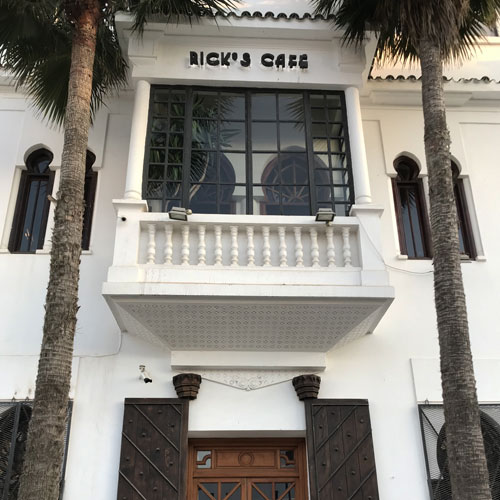
We finished our adventure in Casablanca before flying back to the U.S. Casablanca is Morocco's largest city and combines both French and Moroccan influences. After lunch at a seaside cafe, we visited the Grand Mosque of Hassan II — the second largest Islamic mosque in the world with its 656-foot minaret and massive prayer hall. For dinner Peter and I ate at the famous Ricks' Cafe — now a classy restaurant whose namesake has been ongoing since Hollywood make it famous.
Postscript. When I left for Morocco in mid-January 2020, my biggest concern was my safety as an
American traveling in a Muslim country while Donald Trump was saber-rattling with Iran. No COVID-19 cases had yet to be diagnosed outside of China. During my trip, COVID-19 cases were being identified in Italy but no one had been yet diagnosed within the U.S. As it turns out, the virus was already present in France as we connected through Charles De Gaulle Airport. Several weeks after we returned, Casablanca closed its airport and there were news reports of Americans being stranded in Casablanca waiting for the State Department to arrange flights back to the U.S. Peter and I are fortunate that our timing worked out for us and we are thankful that we remain in good health.

 In January 2020, I travelled to Morocco — my first time visiting the African continent. After flying into Casablanca, Peter and I traveled to the ancient cities of Rabat, Meknes, Fez, and Marrakech and through the Atlas mountains to experience the vast Sahara Desert. Because Morocco was under French control from 1912 until it gained its independence in 1956, the French influence on this country is apparent in many places.